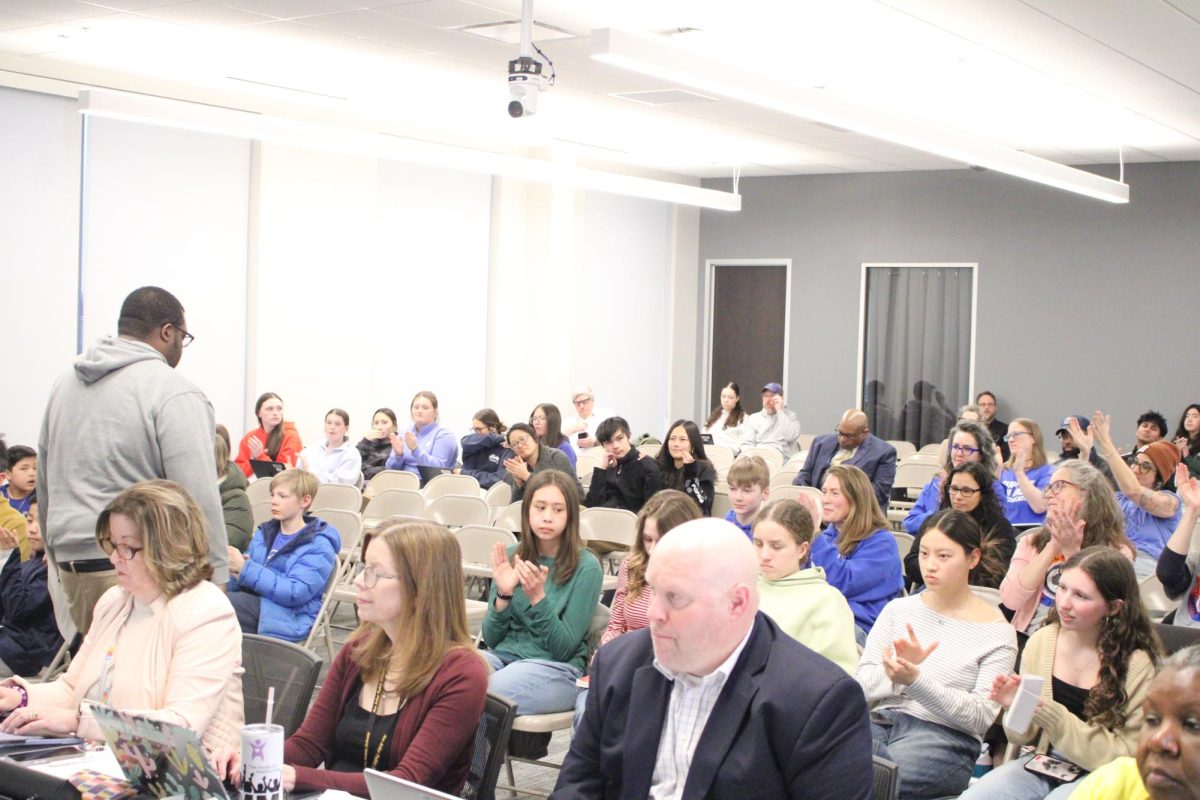
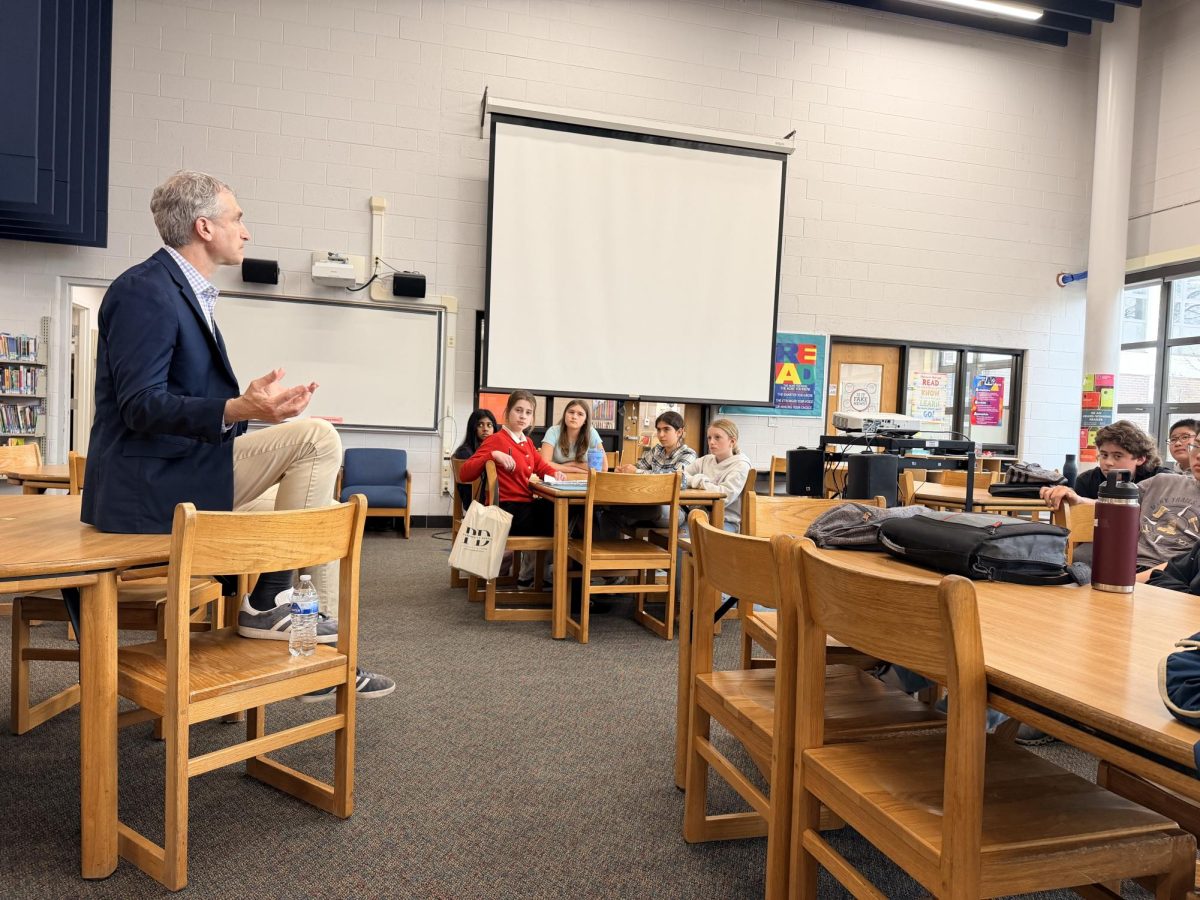
On Friday, April 10, 2026, the quiet routine of Clague Middle School was replaced by a lively discussion on civic power and local impact. Ann Arbor Mayor Christopher Taylor sat down with members of the Michigan Youth in Government (MYIG) club, led by teacher Aaron Wiens, to answer their questions about how a city actually functions and, more importantly, how the students themselves can influence its future.
The meeting focused on the idea that young people do not have to wait until they are adults to make a difference in their community. Taylor opened by clarifying the often invisible role the city plays in their daily lives, noting that while the city does not manage an army, it handles the essentials that students rely on every day.
“There’s no army, right?” Taylor said. “There’s no navy in the city. We don’t have control of the airspace. The Ann Arbor airport is under federal control. We do on the other hand control things like water that comes in. That’s the city. When you go to the bathroom and the dirty water goes out, we clean that up.”
The students, who participate in MYIG to learn about the legislative process, heard that the very infrastructure they use is managed by city employees.
“The storm water falls doesn’t just puddle everywhere it goes into the storm drains,” Taylor said. “We clear it out. Make sure it goes to the river safely and efficiently. The streets. We work on the streets. We work on the sidewalks. We work in the parks, with the police and the fire, all those folks are city employees, the sanitation, solid waste, recycling, compost, the buildings in the city. We expect the buildings to make sure they’re safe to people. Those are the sorts of elections, free and fair. Those are the sorts of things that we do in the state.”
The highlight of the discussion was how students can take action on issues that matter to them. Taylor shared a story about a resident near the Washtenaw Dairy who proposed turning a two way stop into a four way stop for safety. He used this to show how a single person’s observation can spark a city wide change.
“So that’s a very small thing, of how something can get done,” Taylor said. “You either write to your city council member, you write to the mayor with you identify a problem, you identify what you think of as a solution, and hopefully the person will respond. You can also get involved, and that’s how you can get involved as an individual.”
For the aspiring young leaders in Wiens’ club, the conversation explored the power of collective action. For larger issues, like improving neighborhood soccer fields or fixing broken park equipment, Taylor encouraged the group to work together to be heard.
“Let’s say the nets at a park are broken down, if one person reports it, that’s that’s a thing, but also it makes it more powerful if you gather people together,” Taylor said. “So in that case, you could gather a number of people, maybe your neighbors or your peers in school, and send a petition, send some kind of communication that you all sign to your representative, and your representative would then respond and take action.”
For those who want to take their advocacy directly to City Hall, Taylor highlighted the public comment period at council meetings as an essential tool for young residents.
“If you wanted to have something improved, you could go and speak at public comment, at the city council meeting, and then all the city council members would hear you for your three minutes,” Taylor said.
The conversation eventually shifted to the mechanics of running a campaign. Taylor, who began his mayoral journey in 2014, described the specific challenges of reaching out to neighbors. He explained how he uses data to find likely voters in the primary and then meets them at their front door.
“Door knocking is an incredibly important part of campaigning in Ann Arbor, and when I say door knocking, you know the way that it works is, you have an app, you’ve populated that app with data,” Taylor said. “That data includes likely voters in the Democratic primary. So if you are a voter, and you voted in the last three Democratic primaries, I am going to knock on your door.”
This personal touch remains a cornerstone of his strategy as he navigates his current term and plans for the future.
“I’m going to knock on your door,” Taylor said. “I’m going to say, Hi. I’m Christopher Taylor, I’m currently a city council member, but I’m running to be mayor of Ann Arbor, and I hope at some point to earn your support.”
By the end of the meeting, the focus returned to the students’ voices. Taylor concluded by urging the MYIG members to remain active and unafraid to speak up, even when they disagree with those in power.
“If you have questions about something that I’ve said, or, more importantly, something I haven’t said, disagree,” Taylor said.