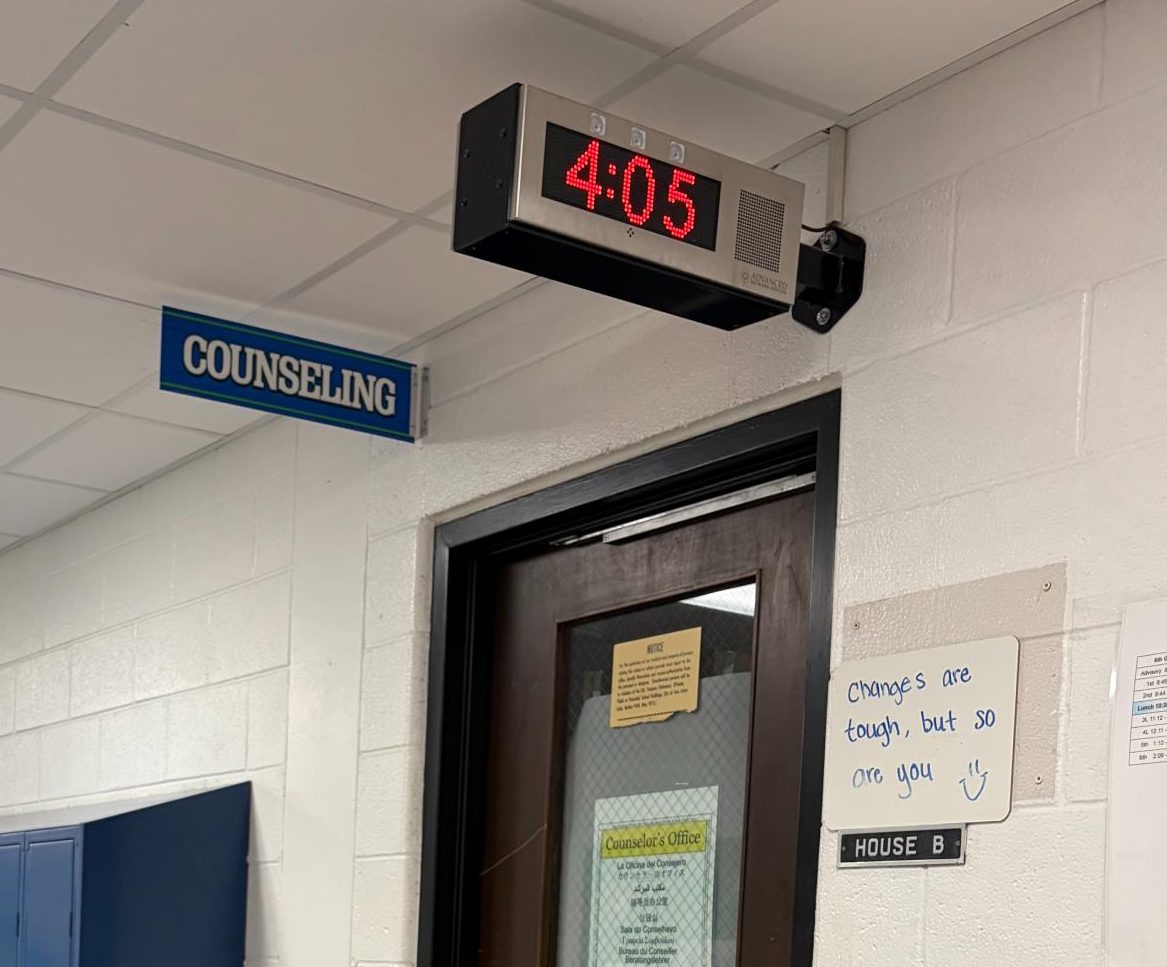
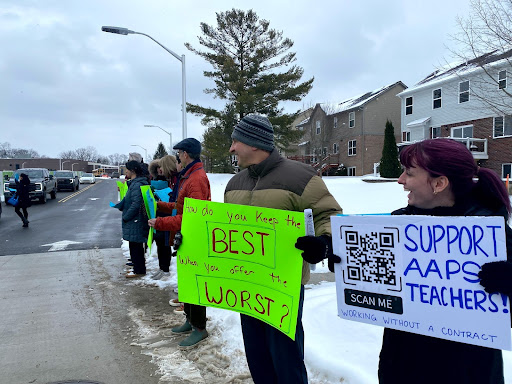
The dismissal bell at Clague Middle School usually signals the end of the day, but on Feb. 3, the exit of students marked the beginning of a different kind of lesson. Light blue pins were placed on winter coats as staff swapped their lesson plans for picket signs. As the students rushed to leave the building, the sidewalk transformed into a physical demonstration representing the Ann Arbor Education Association and their supporters’. Their goal: to educate the community around the frustration with the Ann Arbor Public School “gold standard” reputation being held up by people who can no longer afford to live in the community they serve.
“It is getting a lot more difficult for teachers to afford to be teachers, even though we love our jobs,” Clague social worker Chelsea Knight said.
Standing on the picket line, she described a growing divide between the school’s prestige and the financial reality facing its staff.
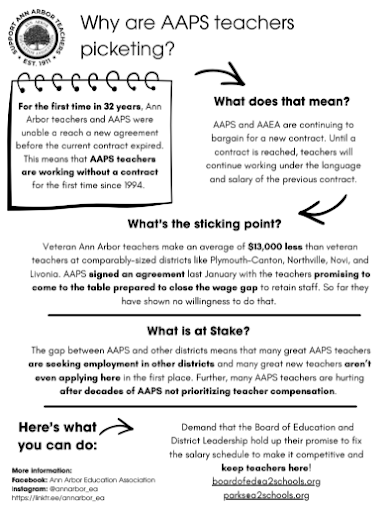
While teachers typically work under multi-year contracts that ensure predictable raises, AAPS has shifted toward single year agreements. This lack of long term security led to the disagreement; as of Jan. 1, 2026, for the first time in decades, teachers have been working without a contract in response to mixed messages from the administration.
“Our district is telling us that they cannot increase our pay without us making concessions,” Knight said. “Now this is very different from the message that they gave us last school year, which was that we would come back to the table and improve the financial offers. And this is hard for teachers, because the cost of living has gone up dramatically over the past five years, while our wages have stayed about the same.”
According to Knight, 20% of Clague teachers have already left in the past year and a half. This week, the 8th grade resource teacher announced her departure from AAPS, increasing the total number of teacher vacancies to three resource teachers and one science teacher.
Those who remain are currently engaged in a frustrating and complicated bargain to secure a fair contract.
“We’re going to fight for livable wages because we want to stay here,” Knight said. “We want to be here for all the students, and we want all of our students to have a quality education.”